|
Big numbers of these guns were seized by the German Army during Belgium invasion, and the remaining ones soon weared under heavy use, so that mainly French guns and howitzers, given by France, allowed the King Albert I courageous small army to dispose of sufficiently strong fire power. The Belgian fuzes from that period are therefore mainly ... French fuzes !
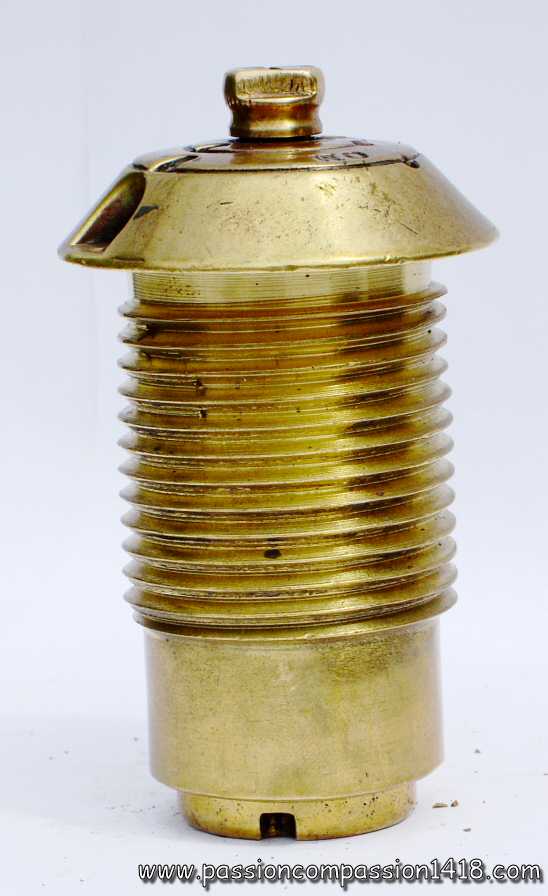
Percussion fuze for 57 mm gun |
||
 |
Before 1914, the Belgian Army equipped its Antwerp, Namur and Liège fortresses with numerous small Cockerill-Nordenfeld 57mm Mle 1888 guns. These guns, with additional steel shield, were also used as Fortress Infantry guns and ship guns.
A specific percussion fuze for 57mm gun was designed for that weapon that was firing either small high explosive shells or canisters. |
|
Percussion fuze for 57mm gun. |
||
 |
 |
|
Percussion fuze for 57mm gun. Pictures courtesy Luc Malchair |
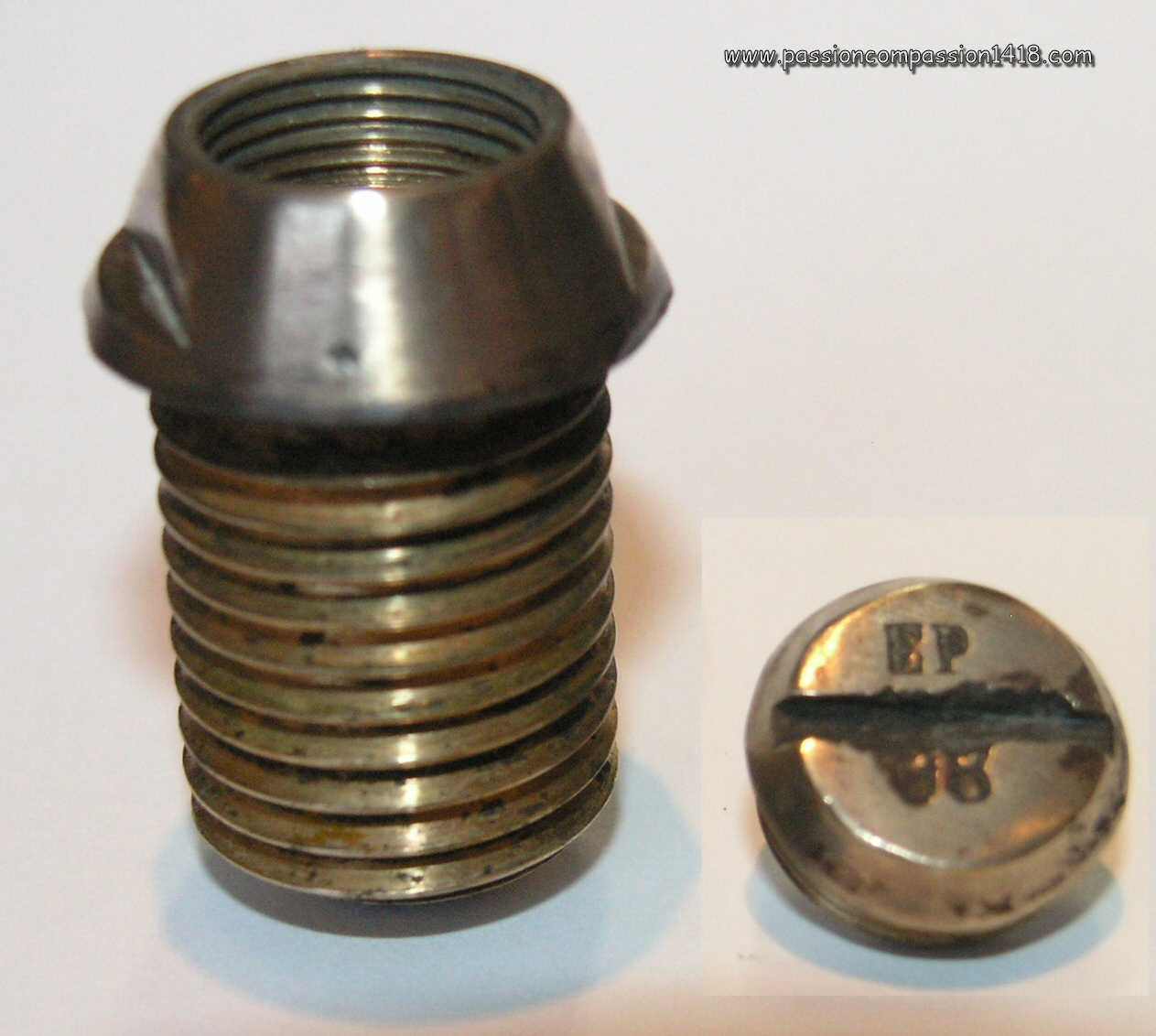
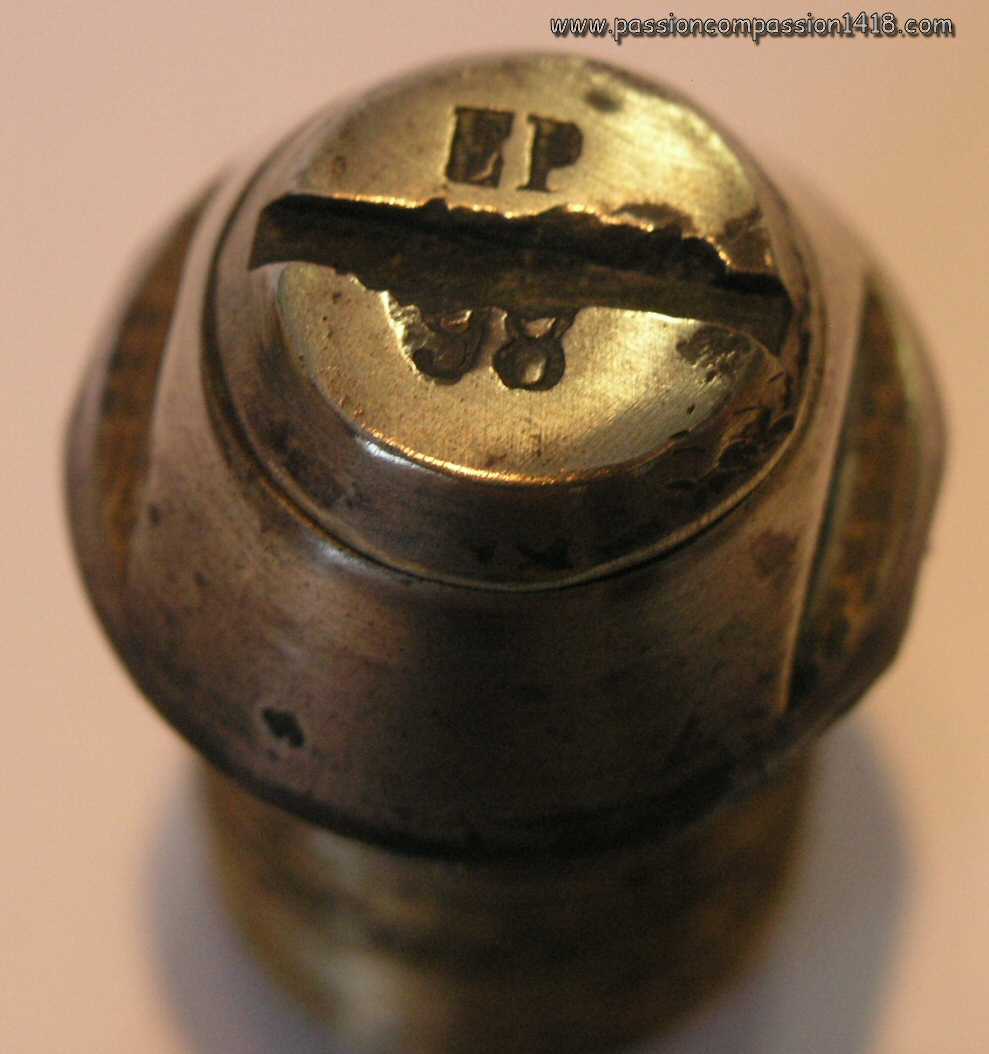
Percussion fuze for 57mm gun. Head markings 'EP - 98' ('Ecole de Pyrotechnie'). Pictures courtesy Luc Malchair |
|
 |
|
|
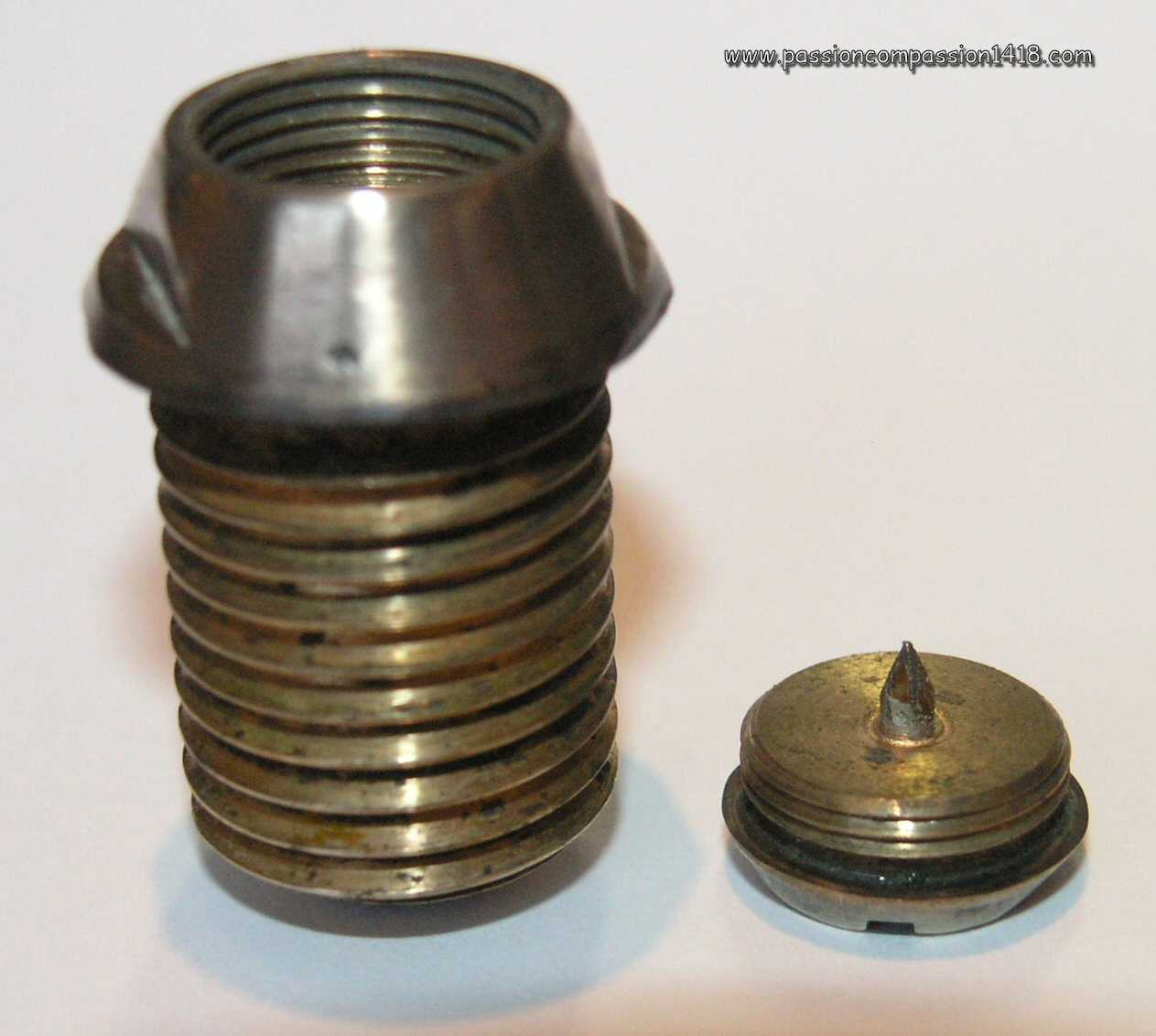
Percussion fuze for 57mm gun. Dismantled head showing the percussion pin. Pictures courtesy Luc Malchair |
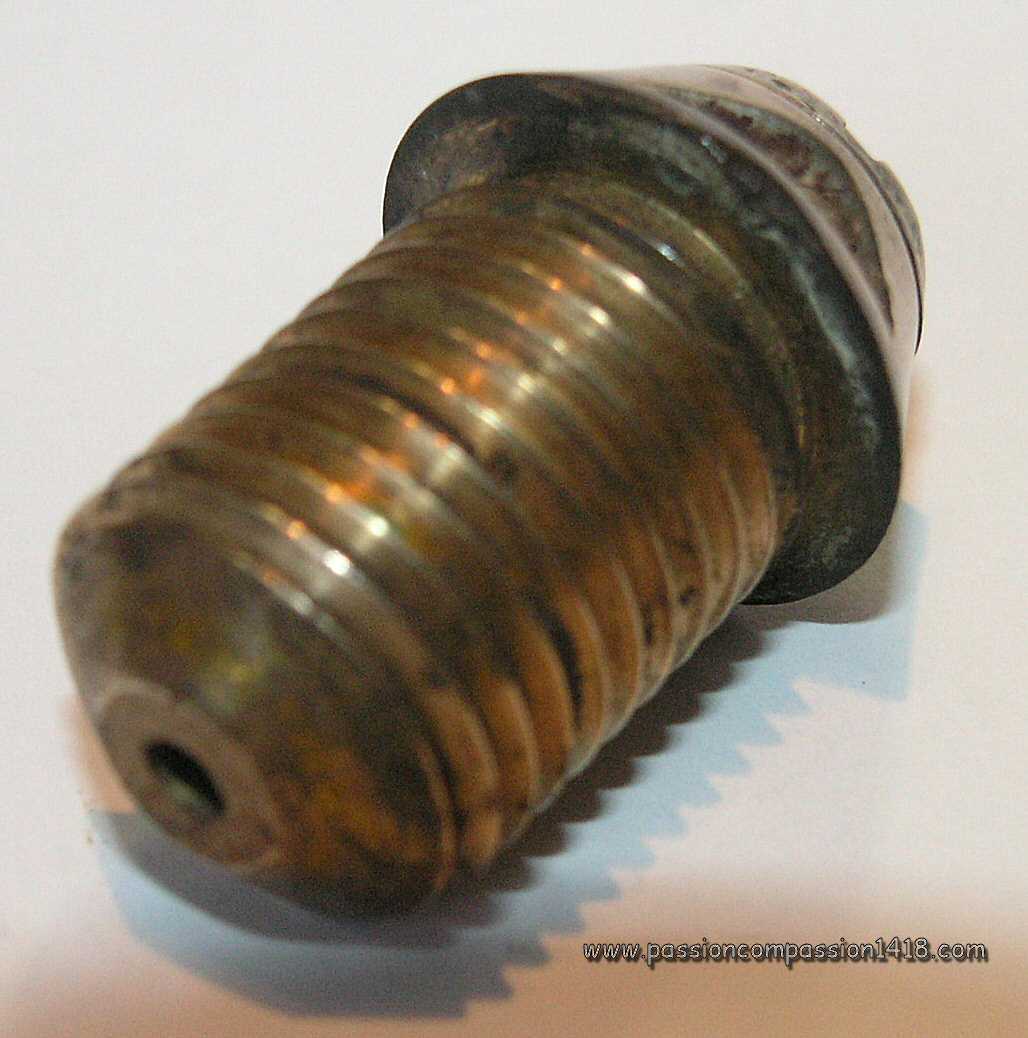
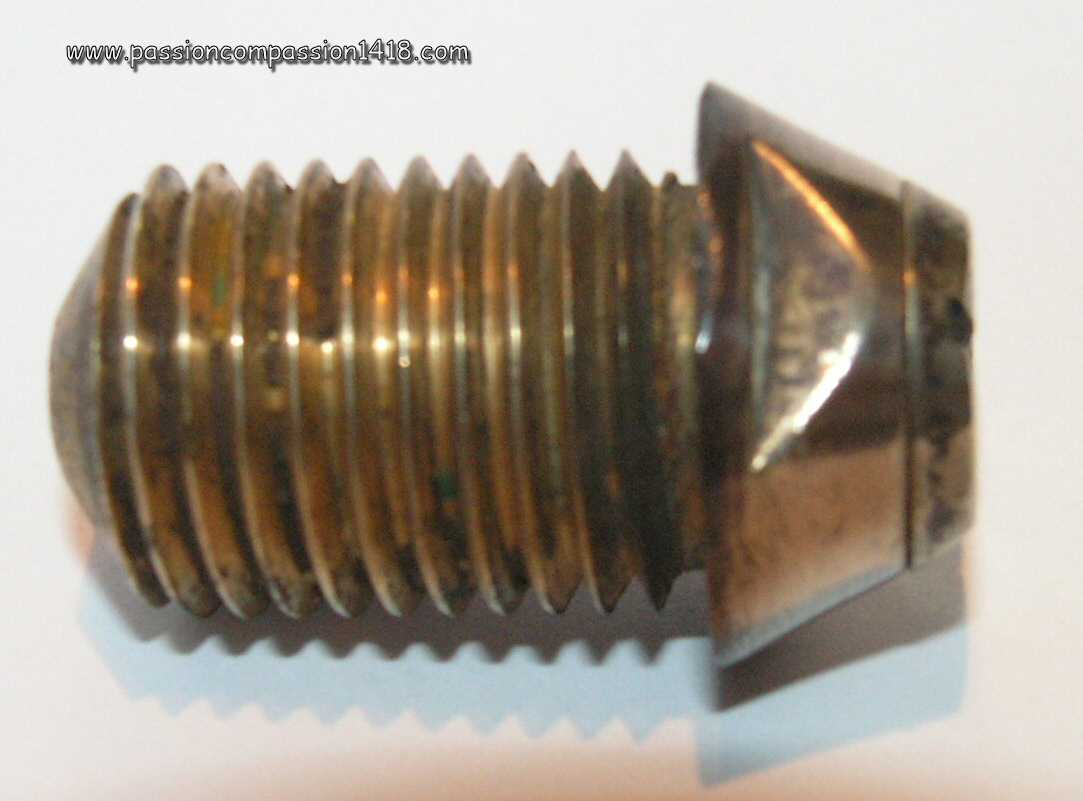
Percussion fuze for 57mm gun. Lateral view. Pictures courtesy Luc Malchair |
|
 |
||
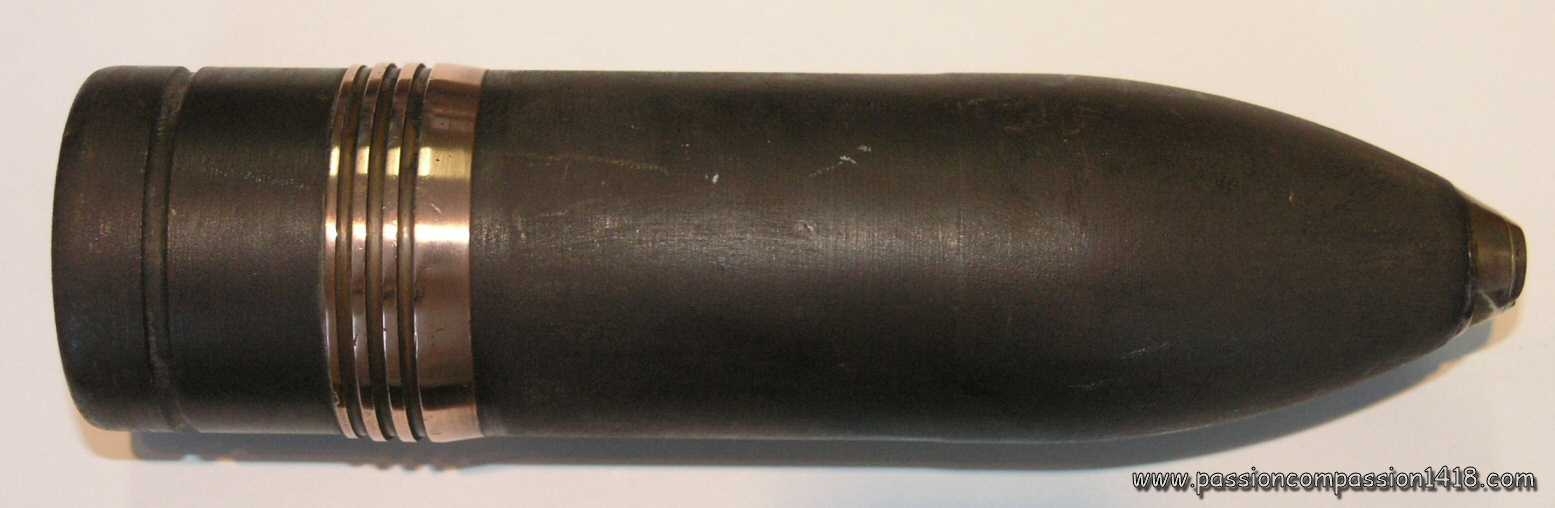
Percussion fuze for 57mm gun. Mounted on a rare 57mm high explosive gun. Pictures courtesy Luc Malchair |
||
Return at the top of the page |
||
Percussion fuze for field artillery |
||
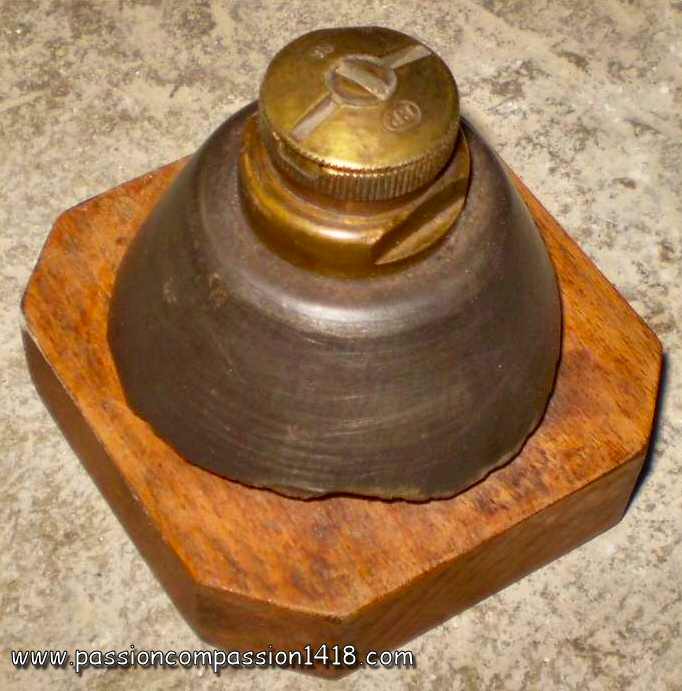 |
This small percussion fuze for field artillery, built by the Belgian 'Ecole de Pyrotechnie', was all made in brass and equipped with a simple percussion mechanism of the 'Budin' type.
Little is known about that item, but its ressemblance with the IInd reich old 'GrZ c/80 percussion fuze' is so obvious that it seems clear this fuze design was German and probably made under licence in Belgium just like most pre-1914 Belgium guns. That fuze was mostly used with the shells of the
|
|
Percussion fuze for field artillery, stilla attached to a shell fragment and mounted ans an inker for a trenches souvenir. Pictures courtesy J-L Ponche |
||
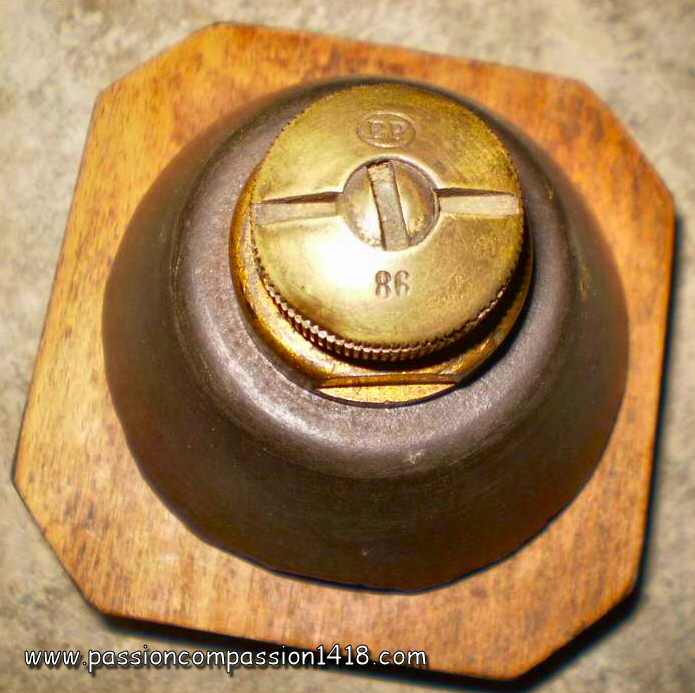 |
 |
|
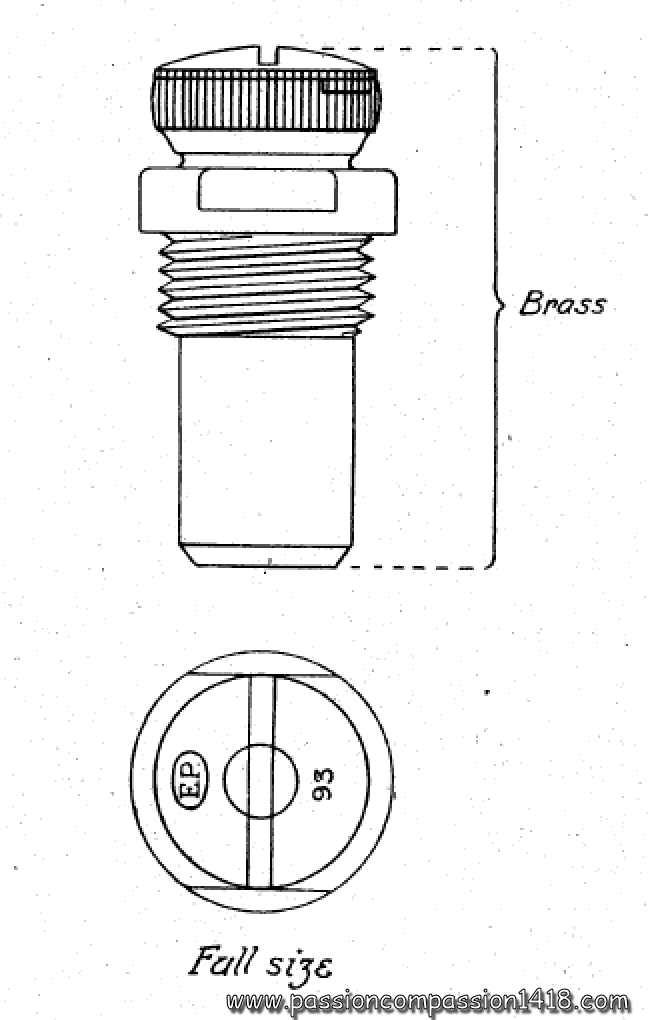
Percussion fuze for field artillery, top view. Markings 'EP' for 'Ecole de Pyrotechnique', and '93' for the manufacturing yaer 1893. Pictures courtesy J-L Ponche |
||
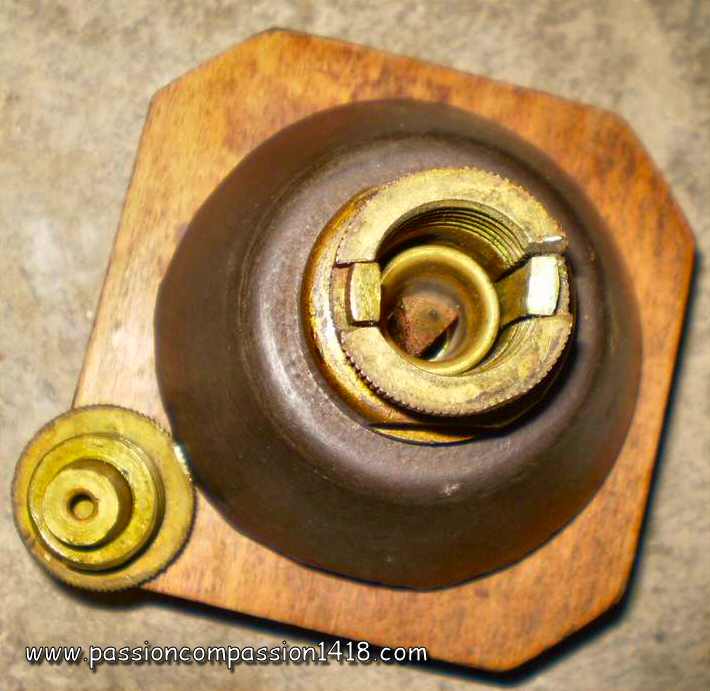 |
||
Percussion fuze for field artillery, top inside view, cap removed (the percussion mechanism is not present). Pictures courtesy J-L Ponche |
Percussion fuze for field artillery. Wartime scheme |
|
Return at the top of the page |
||
Percussion fuze for fortress guns |
||
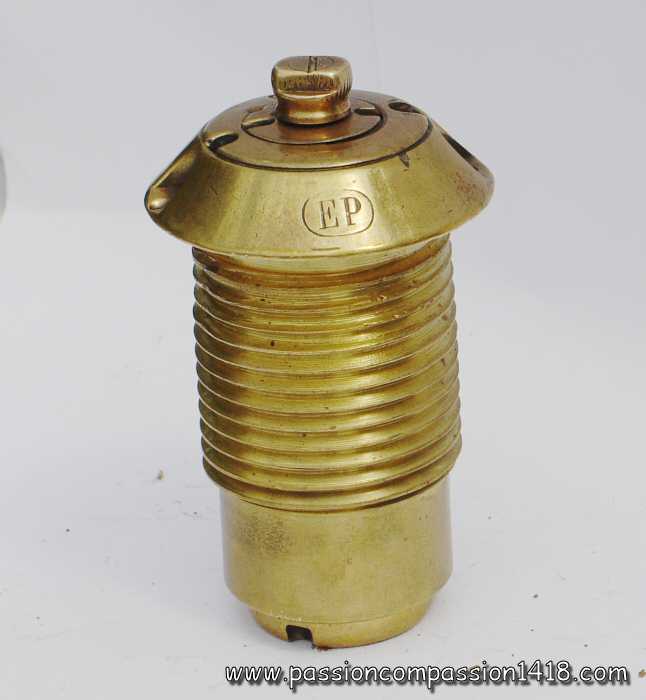 |
Brass fuze, with 51 mm screw thread.
Designed and built by the Belgian Pyrotecnics School ("EP" marking). This fusée percutante de place (fortress percussion fuze) was dedicated to gun shells in its basic design, but also built under different versions :
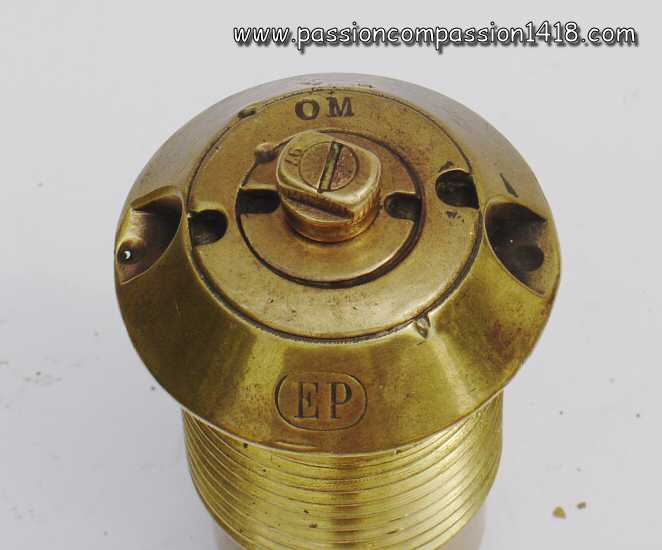
The model shown in the pictures, wearing "OM" markings, was supposingly suitable for at least both mortars and howitzers. This fuze equipped the munitions of the
|
|
Belgian percussion fuze for fortress guns |
||
|
 |
|
Belgian percussion fuze for fortress guns. Characteristic shape, bought in a flee market in Ypres. |
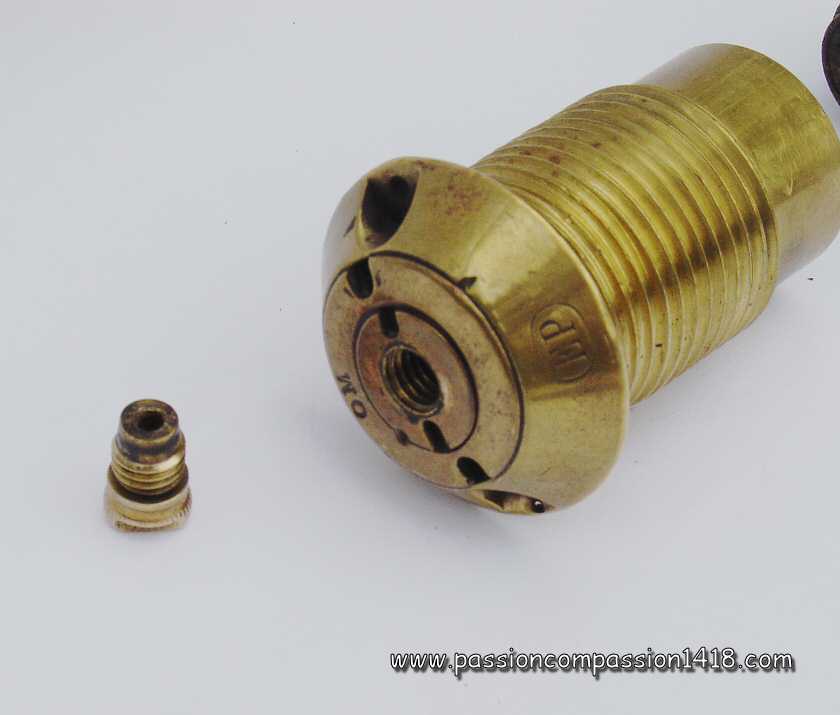
Belgian percussion fuze for fortress guns. Upper view - markings 'EP - OM - 97'. |
|
 |
||
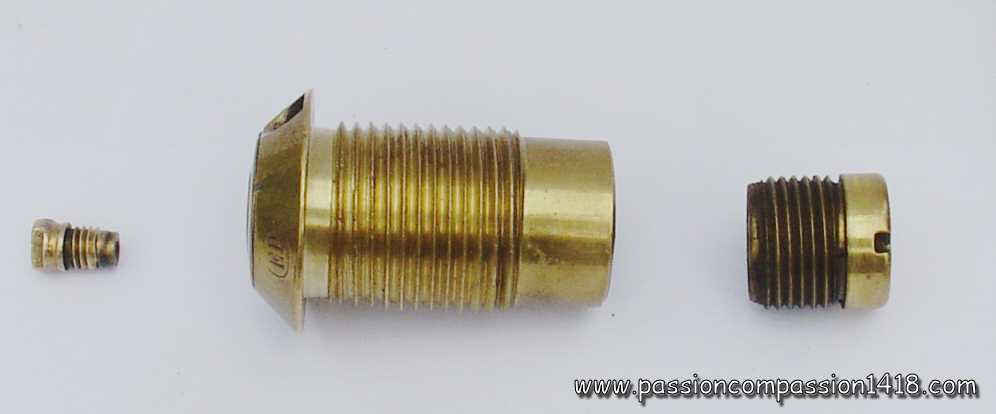
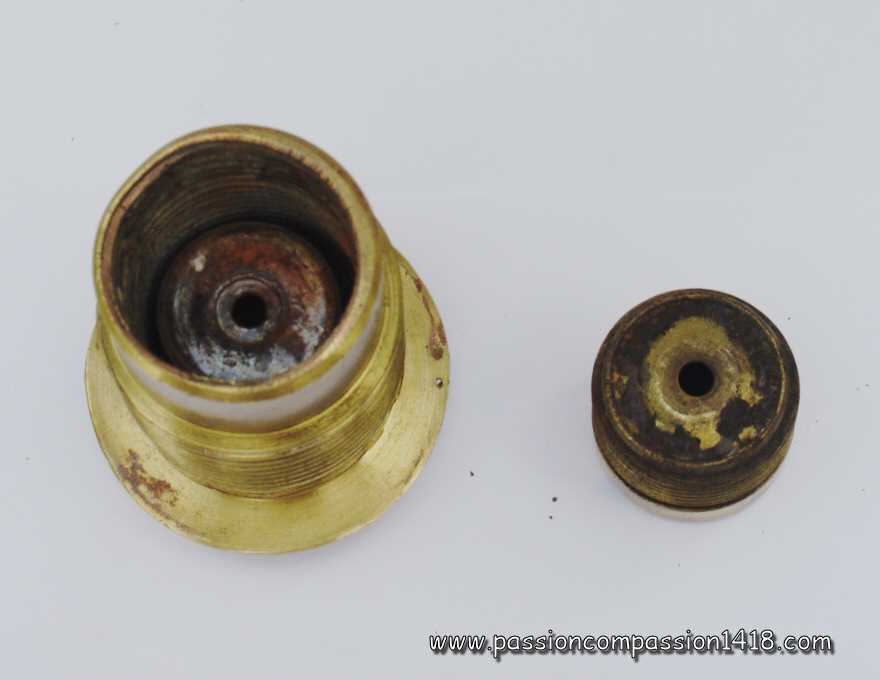
Belgian percussion fuze for fortress guns. Dismantled in 3 separate parts |
||
 |
|
|
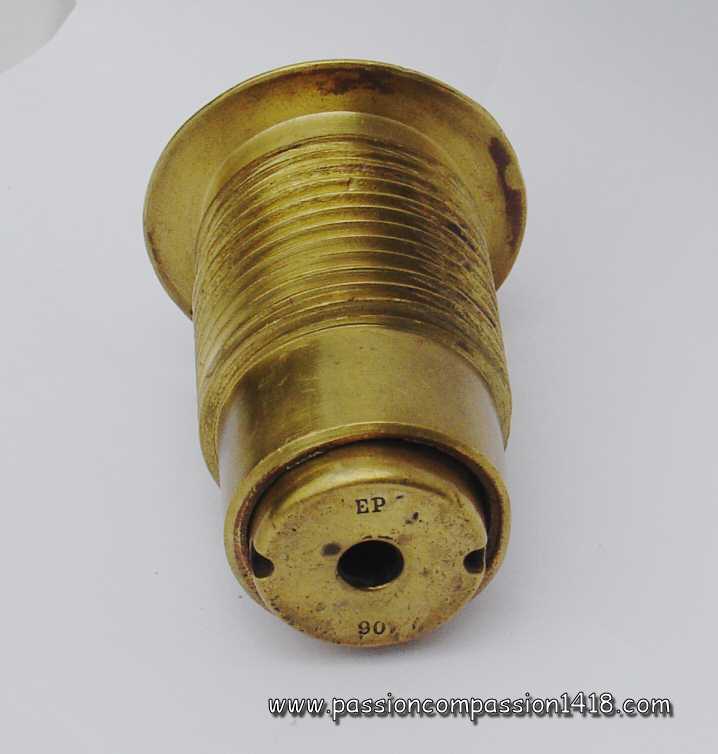
Belgian percussion fuze for fortress guns. Rear view, markings 'EP - 90 (or 06 ?)'. |
Belgian percussion fuze for fortress guns. Front view, dismantled. |
|
 |
|
|
Belgian percussion fuze for fortress guns. Rear view, dismantled. |
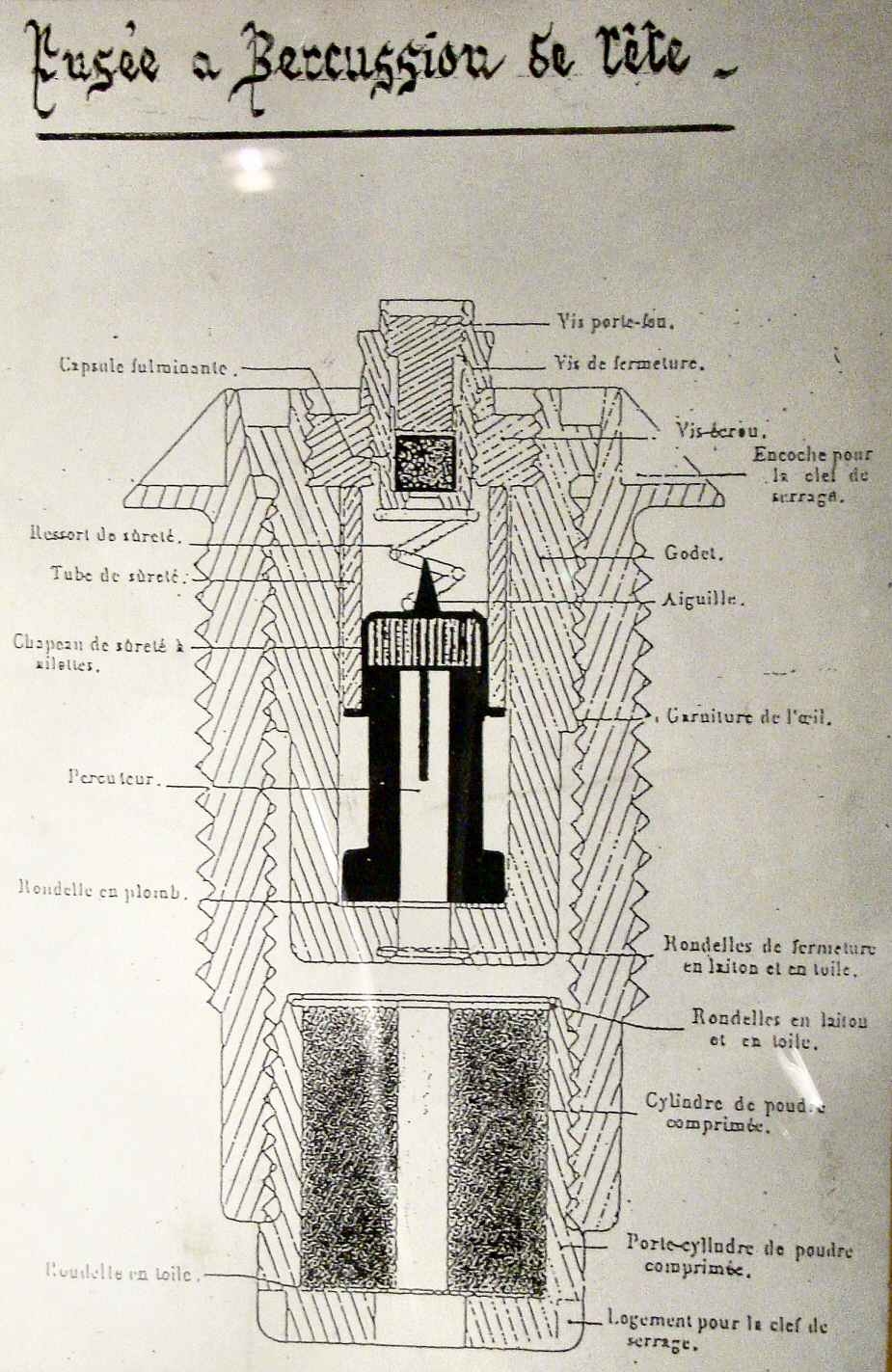
Belgian percussion fuze for fortress guns. Wartime scheme. |
|
Return at the top of the page |
||
Saint Chamond fuze |
||
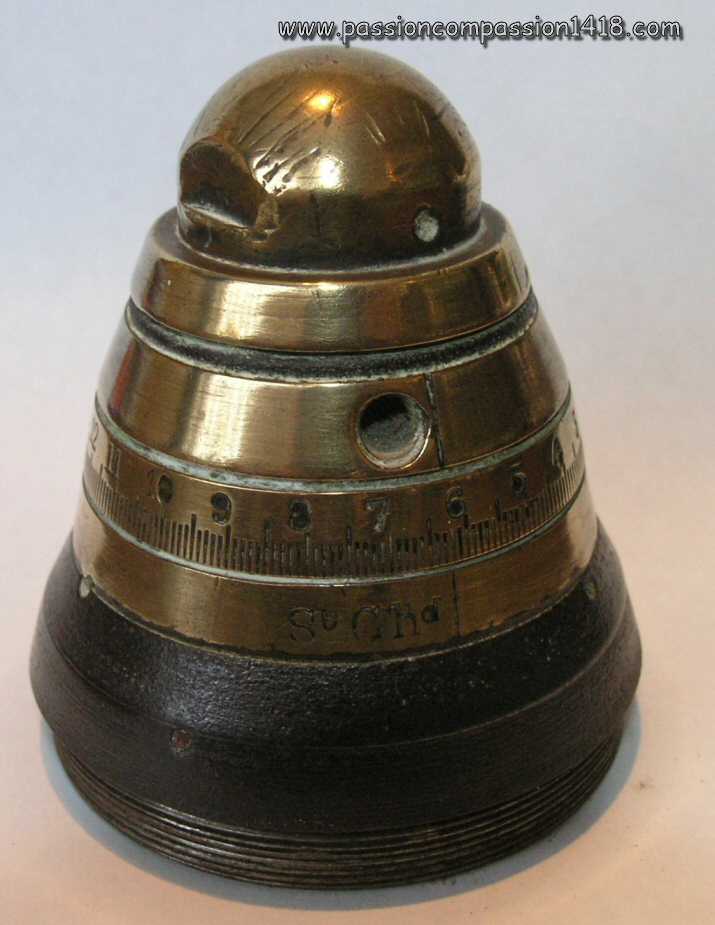 |
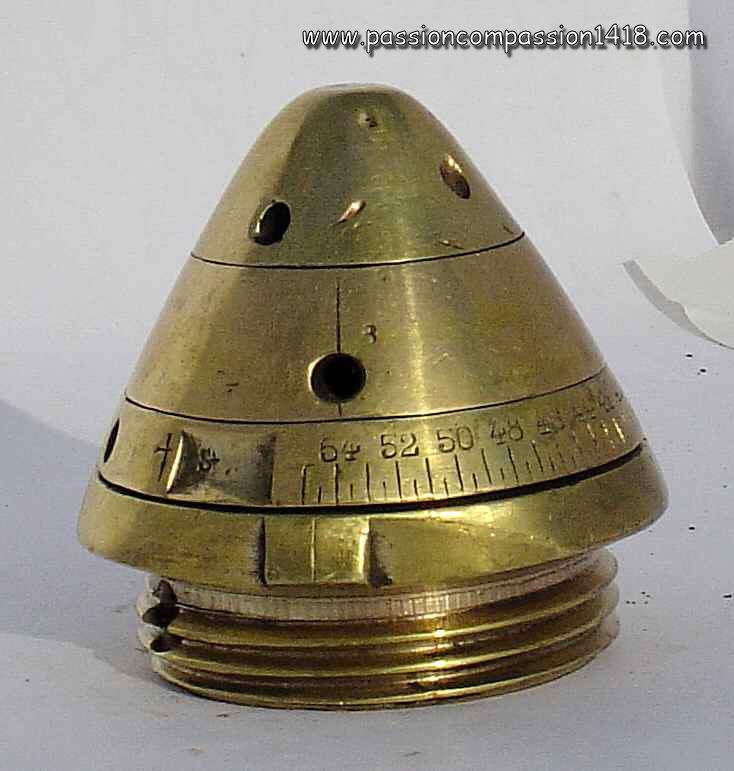
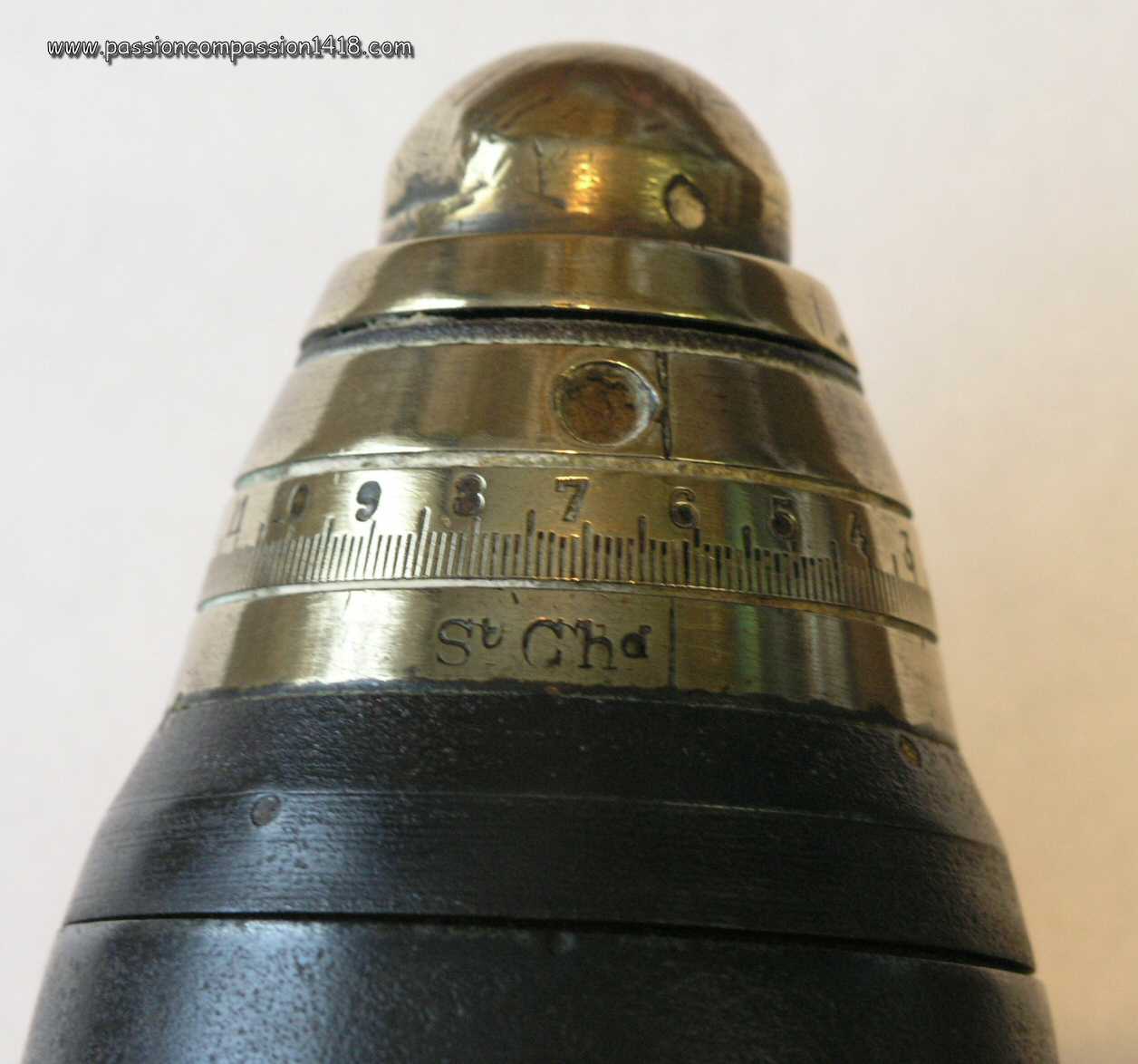
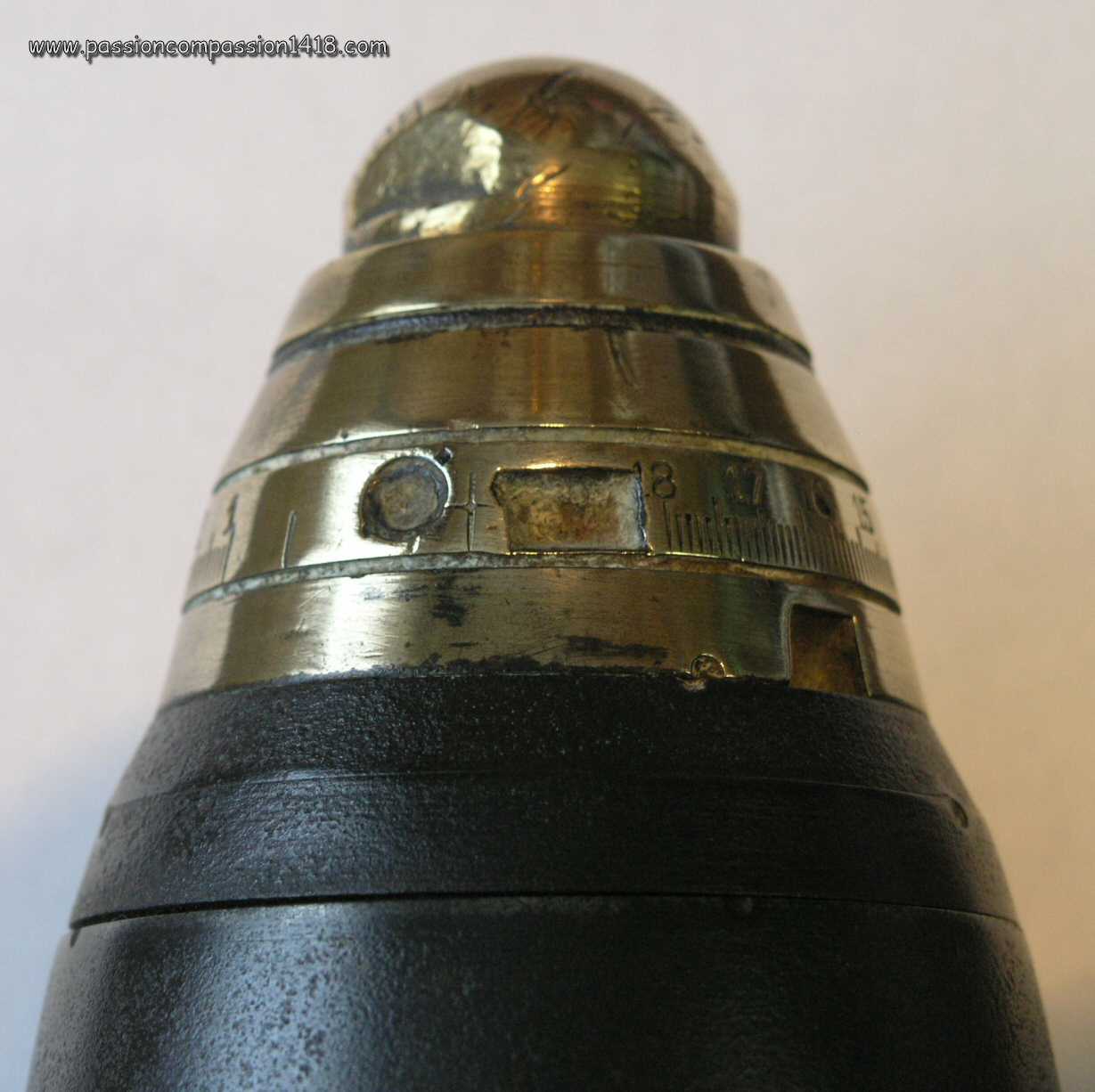
Notable exception to the general use of revoluting fusing tubes for time fuzes in France, this Saint Chamond time and percussion 2-discs fuze was using the classical revolving discs system that was generalized in all the other armies. The lower disc was graduated from 1 to 18.
The St Chamond time and percussion fuzes were set by using a special apparatus named 'Regloir' ('regloir automatique sur banc a trepied') It mainly equipped the projectiles of the :
In 1905 the Belgium army tested a St Chamond 75mm fieldgun battery, before choosing the same caliber Krupp fieldgun. |
|
Saint Chamond fuze. |
||
 |
 |
|
Saint Chamond fuze. Markings 'St Chd'. Pictures courtesy Luc Malchair |
Saint Chamond fuze. Graduations up to 18. Pictures courtesy Luc Malchair |
|
|
|
|
Saint Chamond fuze. Mounted on a 75mm shrapnell shell head. Pictures courtesy Luc Malchair |
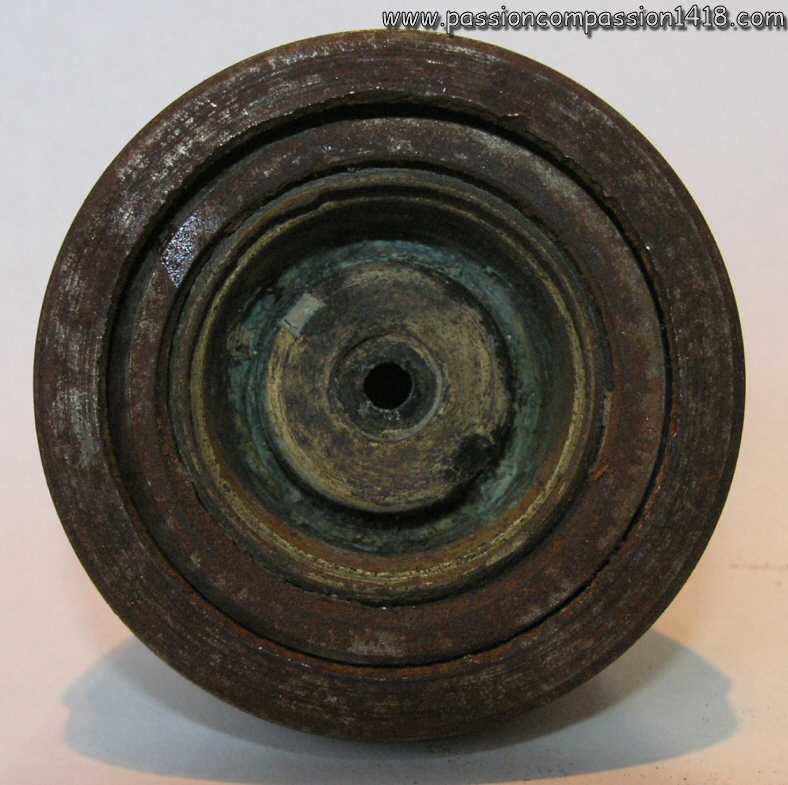
Saint Chamond fuze. view from above. Pictures courtesy Luc Malchair |
|
 |
||
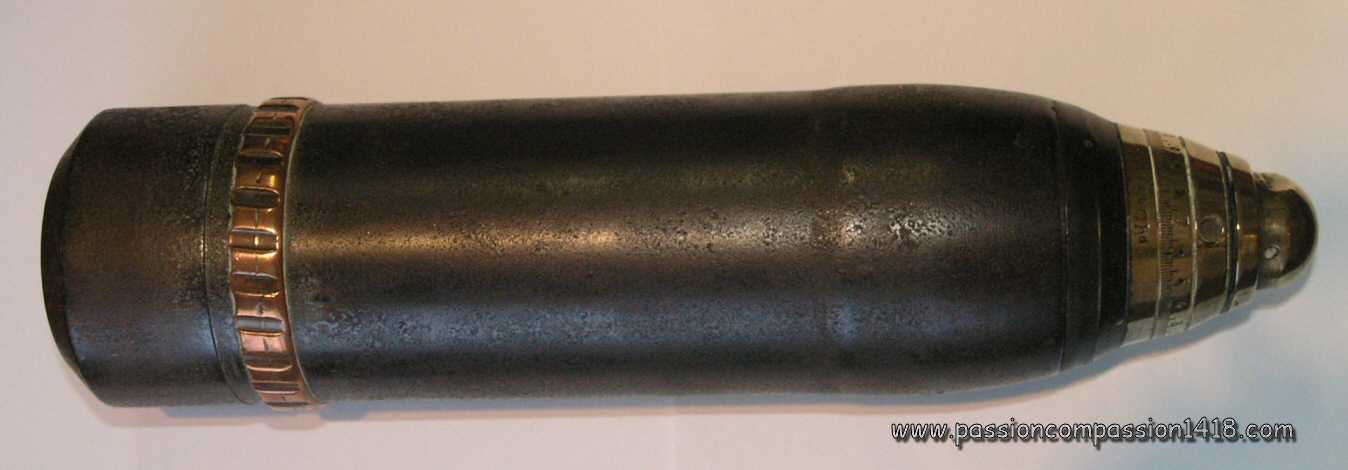
Saint Chamond fuze. This 75 mm shell is said to have taken part to the defense of Antwerp by the Belgian Army in 1914 (unknown unit). Pictures courtesy Luc Malchair |
||
Return at the top of the page |
||
Time and percussion fuze for 75 mm shell |
||
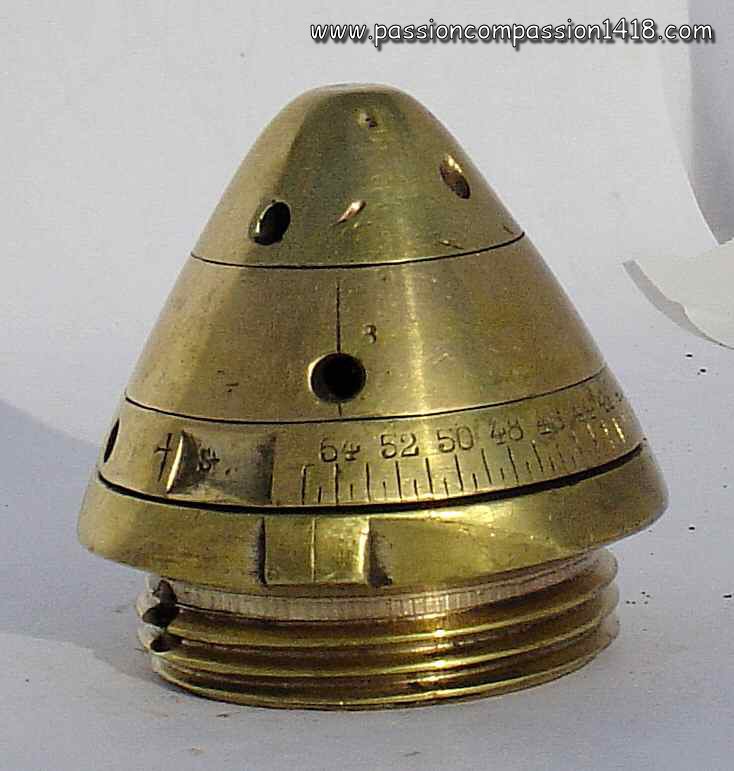 |
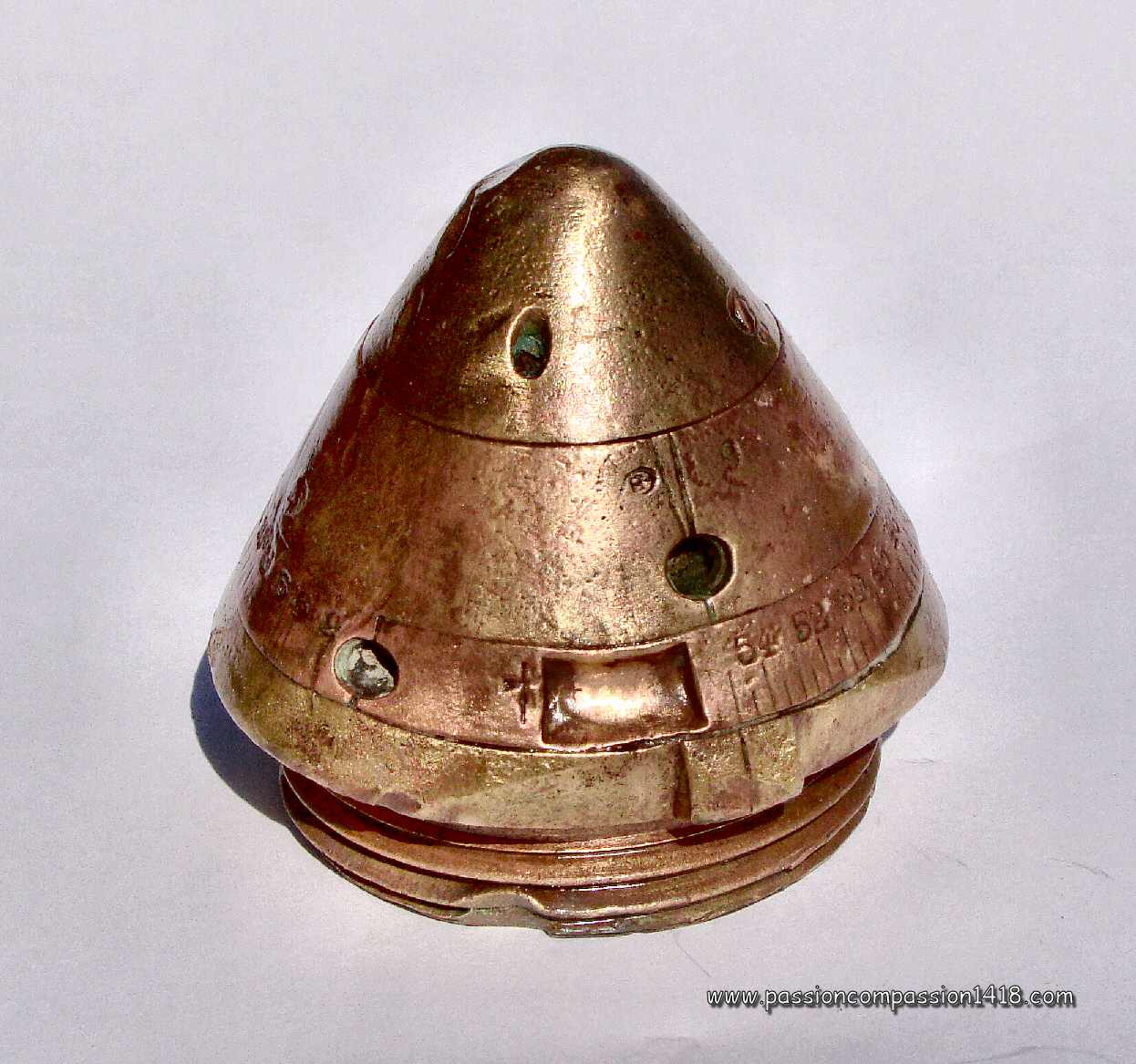
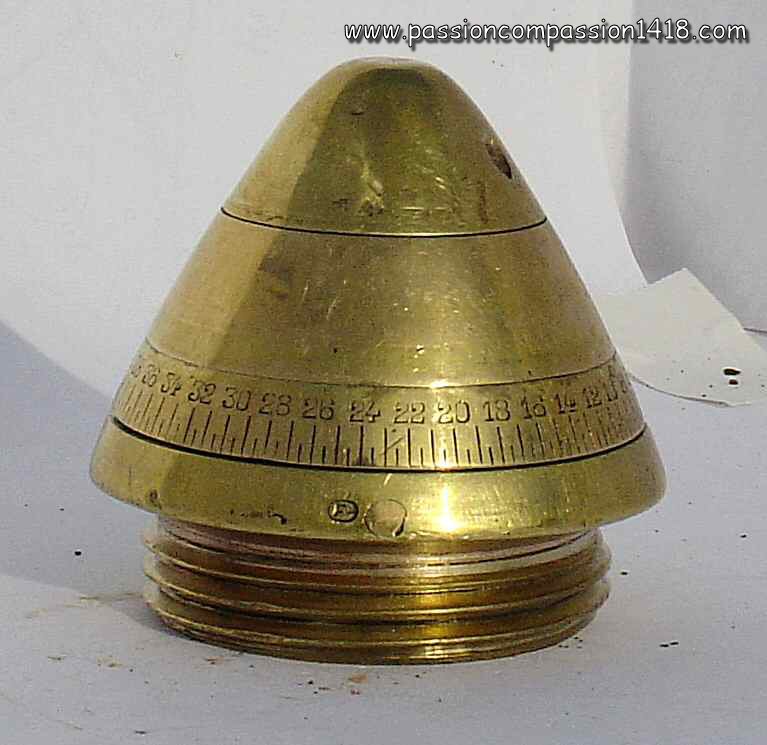
Brass fuze, graduated from 2 to 55 hundreds of meter with 50 meters steps, with 51 mm screw thread.
Designed and built at the Belgian Pyrotecnics School before 1914 ("EP" markings sometimes visble - not on the model shown), it was clearly inherited from the German time and percussion systems. It could be made out of brass or aluminium. That fuse equipped the :
|
|
Belgian fuse for quick firing 75 mm gun |
||
 |
 |
|
Belgian fuse for quick firing 75 mm gun, bought in a flee market |
Belgian fuse for quick firing 75 mm gun |
|
|
 |
|
Belgian fuse for quick firing 75 mm gun, Reaer view, the impact percussion had been removed |
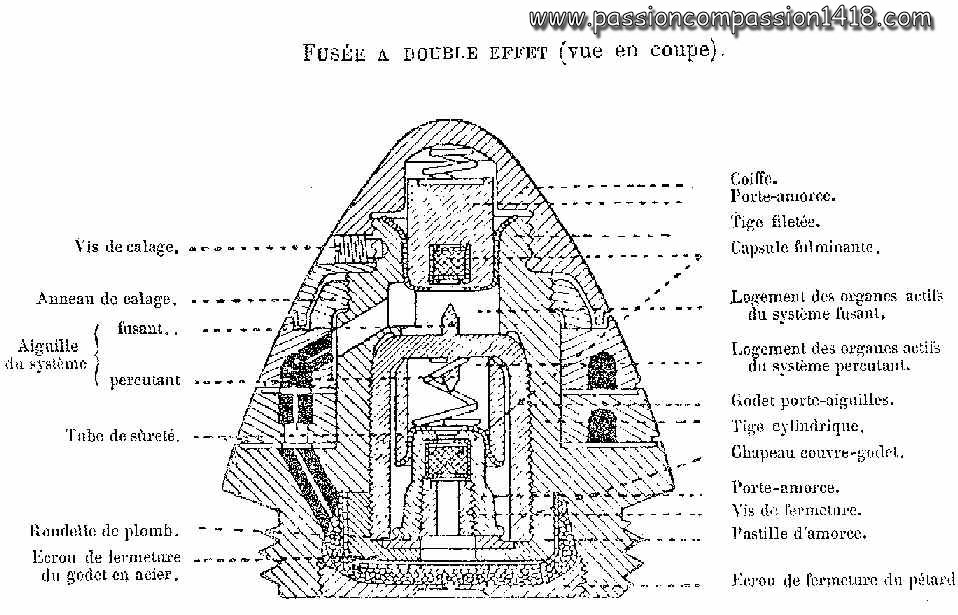
Belgian fuse for quick firing 75 mm gun, Wartime scheme (similar item) |
|
Return at the top of the page |
||